

Rigid power architectures often become the bottleneck in advanced equipment design. Whether you are building semiconductor fabrication tools or sensitive medical instrumentation, configurable power supplies provide the necessary adaptability to match evolving system requirements. Instead of forcing your application to fit a fixed voltage rail, these modular platforms allow engineers to select precise output configurations, signal protocols, and mechanical form factors.
At EVEVSPOWER, we understand that modern power conversion is about more than just moving energy; it is about intelligent integration. As a dedicated DC-DC and AC-DC converter manufacturer with deep OEM/ODM capabilities, we see firsthand how efficiency optimization and robust design reduce total system cost while accelerating time-to-market. The right modular strategy transforms power from a static component into a dynamic system enabler.
What Makes Digital Power Adaptability Suitable for Demanding Environments?
Reliability cannot be compromised when specifications shift mid-project. Engineers developing analytical devices and industrial automation face constant pressure to adjust parameters without redesigning entire boards. This is where the true value of adaptable architecture emerges.
By integrating robust protection schemes and reliable performance characteristics, designers eliminate the variability that plagues traditional fixed supplies. Modern power module designs incorporate consistent behavior from the initial prototype through mass production. For any power conversion modules OEM, this repeatability is essential. It guarantees that every unit performs identically, maintaining uptime and reducing field failures across thousands of deployed units.
What Are High-Density Modular Architectures?
Achieving market-leading power density requires an optimized approach. When space is at a premium, such as in rackmount applications, the architecture must support high line and low line inputs within a compact footprint. Industry benchmarks for this class of configurable power supplies typically target up to 1.3kW on high line and 1kW on low line.
A robust modular design often utilizes multi-slot chassis allowing customer-selectable outputs. This flexibility enables a single base platform to serve multiple end products. Key technical considerations for high-density implementations include:
- Wide Adjustment Range: Adjustable outputs accommodate diverse load requirements without changing hardware.
- Digital Communication: Protocols like PMBus over I²C can enable telemetry and control separation in compatible systems.
- Protection Features: Over-voltage, over-current, and thermal protection prevent cascading failures.
- Thermal Management: High-efficiency topologies significantly reduce heat generation and cooling costs.
- Safety Compliance: Adherence to relevant safety standards ensures suitability for target environments.
While specific configurable chassis platforms exemplify these traits in the broader market, EVEVSPOWER applies similar engineering principles across our wide input DC-DC and AC-DC converter families. Our boost converters, for instance, achieve up to 98% efficiency through synchronous external-MOS designs, demonstrating that high performance and thermal management go hand-in-hand in modern modular design.
How Can Intuitive Interfaces Streamline Development?
Software should accelerate hardware validation, not hinder it. Advanced user interfaces for power configuration streamline product development by providing secure, intuitive dashboards. These tools offer real-time control, graphing, and datalogging capabilities that replace cumbersome bench measurements.
When an engineer can visualize transient response or log efficiency curves directly through the supply’s UI, decision-making becomes faster and more accurate. This software layer acts as a bridge between the power module and the system integrator, turning raw electrical data into actionable engineering insights.
What Are Application-Specific Integration Strategies?
Versatility defines the utility of configurable platforms. They are indispensable for testing labs, manufacturing floors, and embedded systems where electrical parameters vary wildly. A wide input DC-DC converter supplier must recognize that one size rarely fits all.
Tailored integration means matching the power solution to the specific regulatory and operational environment. Whether the need is for battery charging in mobile robotics or stable bias voltages in optical sensors, the ability to adjust current limits and voltage setpoints allows a single hardware SKU to address multiple verticals.
What Are the Strategic Advantages Over Fixed Output Designs?
Why invest in modularity instead of standard bricks? Beyond simple consolidation, configurable supplies fundamentally simplify system architecture. They reduce inventory complexity by allowing a single programmable unit to replace multiple fixed-voltage SKUs.
Security and resilience also improve significantly. Advanced monitoring identifies potential faults before they cause downtime, while password protection safeguards critical calibration data against unauthorized tampering. In an era of connected industrial IoT, cybersecurity within the power rail is no longer optional. Furthermore, as an ISO9001 and CE certified DC-DC converter factory, EVEVSPOWER ensures that this flexibility does not come at the expense of quality. Our 24-month warranty and rigorous testing protocols back every module, ensuring that adaptability never compromises long-term reliability.
How Can Fault Diagnosis and System Recovery Be Accelerated?
Downtime is expensive. When a critical system fails, the speed of recovery depends entirely on available diagnostic data. Configurable architectures excel here by enabling granular fault isolation.
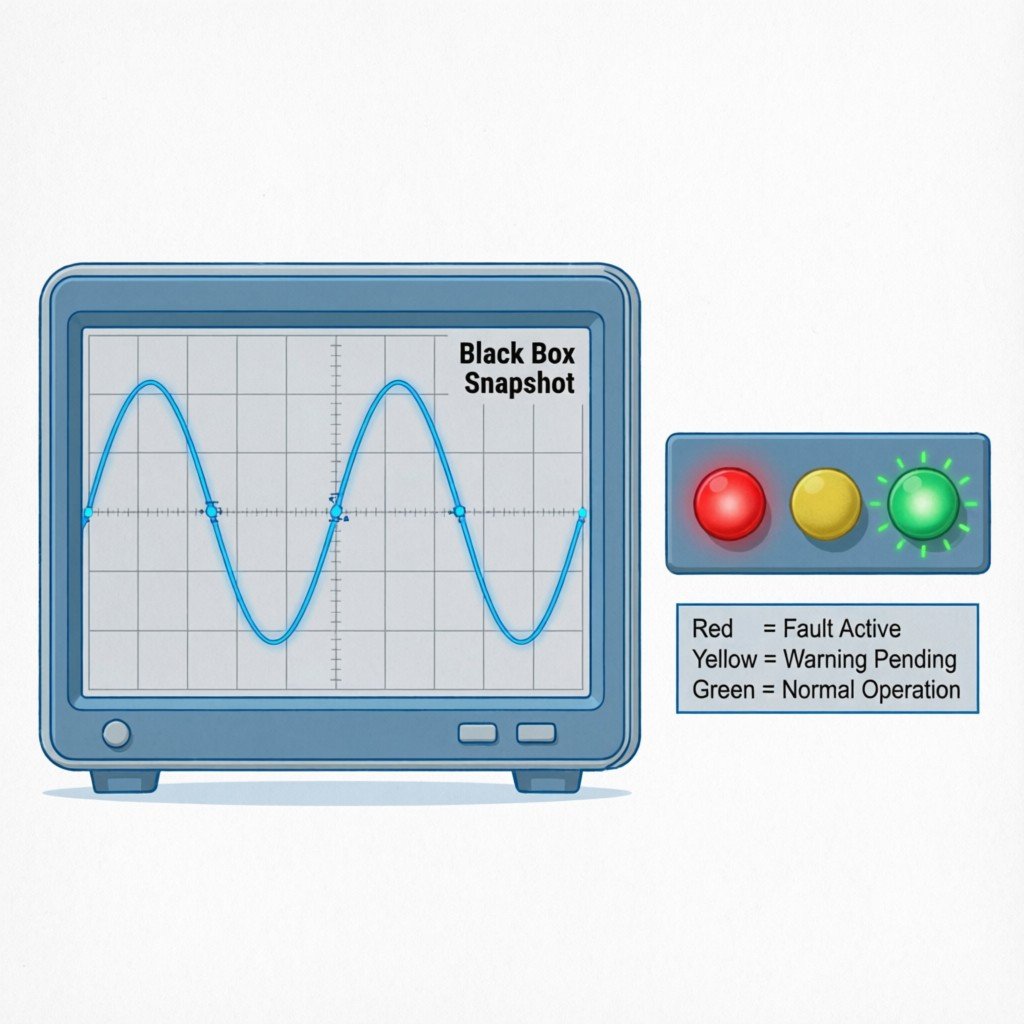
Advanced features like “Black Box Snapshot” record detailed system status immediately prior to shutdown, preserving evidence that would otherwise vanish during a reboot. This drastically reduces troubleshooting time. Additionally, visual indicators such as tri-color LEDs with chassis-mounted truth tables allow technicians to assess health instantly without needing laptops or serial connections. These practical design choices transform maintenance from a guessing game into a structured, efficient process.
Where Can Programmable Digital Power Solutions Be Sourced?
Selecting the right partner matters as much as selecting the right topology. Configurable power supplies are foundational to developing, testing, and powering next-generation electronics. They support rapid prototyping and enhance final product performance through adjustable outputs and digital intelligence.
EVEVSPOWER supports this journey with tangible manufacturing advantages. With over 1,000 catalog models ranging from 1W to 5000W and a daily capacity exceeding 10,000 units, we provide the scale needed for volume production alongside the agility for custom ODM projects. Samples ship in 5-10 working days, keeping your validation timeline on track. If you require technical consultation or pricing for your next project, reach out to us directly.
What Are Reference Architectures in Modular Power?
Understanding industry benchmarks helps inform sourcing decisions. Below are three common configurable platform archetypes found in high-reliability sectors. While EVEVSPOWER specializes in component-level DC-DC and AC-DC converters rather than configurable chassis platforms, understanding these system-level categories helps engineers evaluate where discrete converter solutions may serve as alternatives or complementary components.
High-Density Digital Platforms
This tier targets maximum power density in minimal space. Typical specifications for this category include 1.3kW high line / 1kW low line output in a 1U form factor. Designs often leverage SiC or GaN semiconductors to achieve high efficiency. Key differentiators include dedicated UI software for configuration, isolated digital communication buses, and comprehensive safety approvals for medical and ITE applications.
Scalable Fan-Cooled Systems
For applications requiring higher total power or varied voltage rails, scalable platforms are standard. These systems typically support modular outputs with wide voltage ranges. Medical (2 x MOPP) and ITE approvals are common prerequisites for this category. This architecture excels in test equipment and industrial automation where airflow is managed and modularity is paramount.
Compact Semiconductor Compliant Units
Space-constrained semiconductor manufacturing often demands fan-cooled solutions packed into 1U heights. These units typically house multiple independent modules and feature full digital configurability via PMBus. Compliance with SEMI F47 voltage sag immunity is a critical specification for this category, ensuring wafer processing equipment remains operational during brief mains disturbances.
| Platform Tier | Typical Power Range | Key Interface | Primary Application Focus |
|---|---|---|---|
| High-Density Digital | 1kW – 1.3kW (1U) | Isolated PMBus / UI | Medical, Aerospace |
| Scalable Fan-Cooled | 600W – 2.5kW | Analog / Digital Mix | Industrial Automation, Test |
| Compact Semi Compliant | ~1.2kW (1U) | PMBus | Semiconductor Fab Equipment |
For engineers seeking to implement these architectures with customized specifications, contact allan@everspower.com or visit www.everspower.com to discuss your project requirements.