

Power conversion is the heartbeat of modern electronics, yet selecting the right module often feels like navigating a maze of conflicting datasheets. You need more than just a component; you need a reliable DC-DC power converter supplier that understands the friction between theoretical specs and real-world integration. Whether you are designing medical instrumentation, industrial automation, or semiconductor equipment, the goal remains consistent: safe, efficient, and manufacturable power delivery.
At EVEVSPOWER, we approach this challenge as an OEM/ODM manufacturer with a 5000 m² facility in Dongguan. We don’t just ship parts; we engineer solutions across a 1W to 5000W spectrum, backed by a catalog of over 1000 models. This guide cuts through the marketing noise to address the technical realities engineers and buyers face when specifying power modules.
How Can Engineering Reliability Be Built into Critical Power Systems?
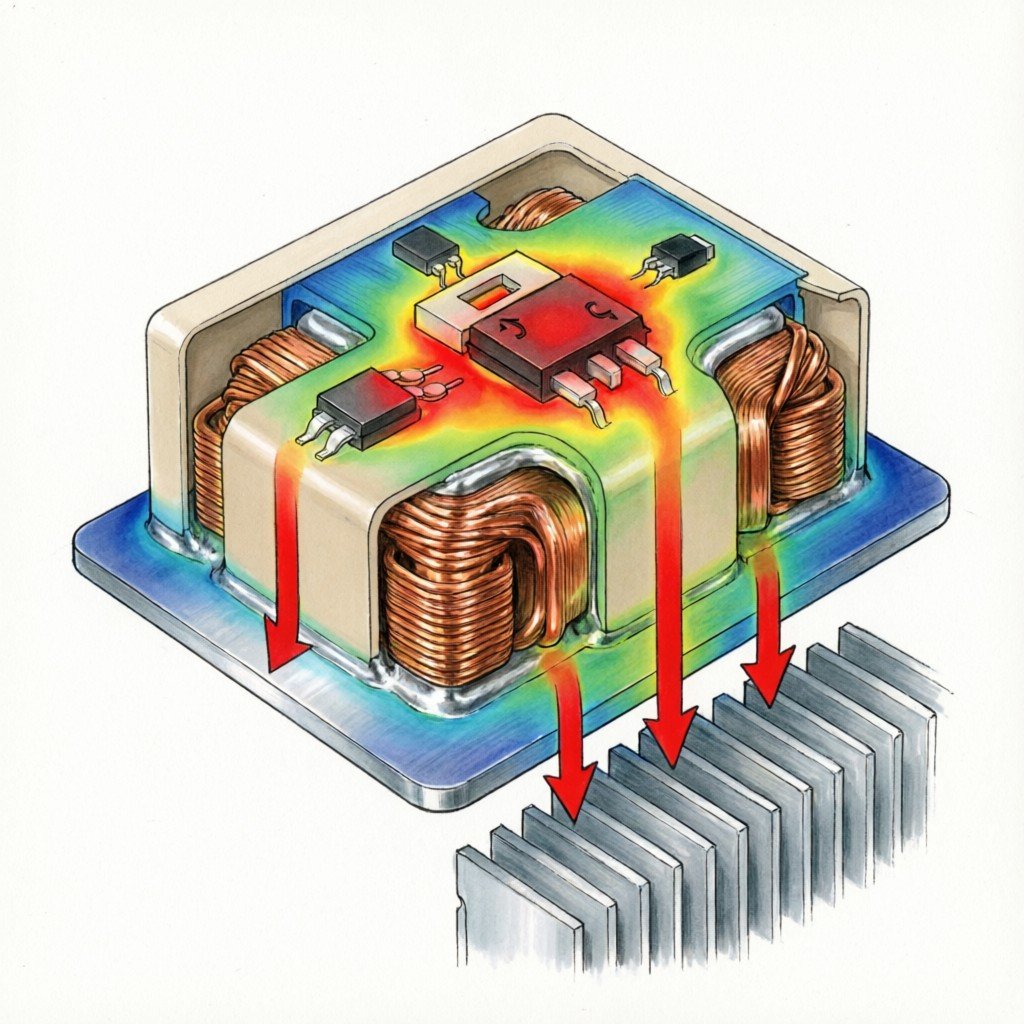
Certifications matter, but design maturity matters more. When evaluating high-performance modules, look beyond the basic approval stamps. The true test lies in how well a converter handles thermal stress, EMI, and transient loads within your specific enclosure.
Experienced power conversion modules OEM partners optimize designs for integration ease. This means considering PCB layout constraints, heat dissipation paths, and electromagnetic compatibility early in the development cycle. For instance, our boost converters achieve up to 98% efficiency through synchronous or non-synchronous external-MOS designs, directly reducing thermal management burdens in dense assemblies. Whether supporting patient-contact medical devices or rugged renewable energy systems, the engineering focus must remain on minimizing failure points while meeting stringent industry standards.
What Are Isolation Barriers in Power Modules?
Datasheets frequently list an “isolation voltage” rating, but treating this number as a continuous operating limit is a common and dangerous mistake. That figure typically represents a short-term dielectric withstand test, not a permanent working voltage capability.
You must distinguish between functional, basic, and reinforced isolation based on your safety requirements:
- Functional Isolation: Sufficient for normal operation where electric shock isn’t a primary risk.
- Basic Insulation: Provides fundamental protection against shock.
- Reinforced Insulation: Equivalent to double insulation, essential for medical or high-risk industrial applications.
As an ISO9001 DC-DC converter factory, EVEVSPOWER ensures isolated DC-DC converters provide 1000V+ isolation with inputs up to 160V, clearly defining barrier integrity for long-term reliability rather than just passing a momentary hipot test.
How Should Specifications Be Matched to Application Needs?
Finding the ideal solution requires filtering through hundreds of potential configurations. Rather than browsing aimlessly, structure your search around four critical parameters: power level, voltage range, mechanical format, and regulatory environment.
A versatile wide input DC-DC converter portfolio simplifies inventory management and design reuse. Our J Series buck converters, for example, accept wide 8–80V inputs in plastic packages, while our Y Series offers die-cast IP67 waterproofing for harsh environments. This breadth allows system architects to standardize on a single manufacturing partner across diverse product lines.
What Is the Difference Between Working Voltage and Test Voltage, and How Can Specification Traps Be Avoided?
Confusing isolation test voltage with continuous working voltage is perhaps the most frequent specification error in power electronics. The test voltage validates manufacturing quality and barrier integrity for safety certification. It does not indicate what the device can handle indefinitely.
If your application involves significant potential differences between input supply and output load, the continuous working voltage rating is your governing constraint. Exceeding this limit accelerates insulation degradation and invites catastrophic field failures. Always verify the working voltage in detailed technical documentation, not just the summary table. At EVEVSPOWER, we provide comprehensive spec sheets and support NDA-protected OEM/ODM discussions to ensure your selected module matches actual operational stresses.
What Does the Comprehensive Converter Portfolio Include?
Selecting the right mechanical package is as important as electrical performance. Your choice impacts assembly speed, serviceability, and thermal management strategy. Below is a breakdown of common form factors and their typical applications.
| Feature Category | Board Mount Modules | Chassis Mount Units | DIN Rail Solutions |
|---|---|---|---|
| Typical Power Range | Low to Medium (e.g., 0.25W – 750W) | Medium (e.g., 6W – 60W+) | Industrial Control Standard |
| Primary Use Case | Embedded PCB integration | External wiring, ruggedized | Control cabinets, automation |
| Thermal Management | PCB copper pour / convection | Baseplate conduction / heatsink | Natural convection via rail |
| Connection Type | Through-hole / SMD | Screw terminal / Molex | Spring clamp / screw |
| Key Advantage | Space efficiency | Mechanical robustness | Rapid installation & replacement |
EVEVSPOWER supports all three formats with scalable options from 1W micro-modules to 5000W industrial units, ensuring continuity across your entire product ecosystem.
PCB Integration Options
Board-mount converters prioritize footprint efficiency and automated assembly compatibility. Available in both surface-mount and through-hole configurations, these modules integrate directly into your main circuit board. They suit applications where space is premium and power levels remain within PCB trace capabilities.
Enclosed and Chassis Solutions
When power levels exceed practical PCB limits or environmental protection is required, chassis-mount formats take over. These units feature robust metal housings with integrated baseplates for effective heat transfer. They connect via secure terminals, making them ideal for mobile equipment, outdoor installations, or any application subject to vibration and contamination.
Industrial Cabinet Standards
DIN rail mounting remains the gold standard for factory automation and control panels. These converters snap onto standard rails for tool-free installation and maintenance. Designed for vertical airflow and easy daisy-chaining, they streamline panel building and reduce downtime during servicing.
Which Technical Clarifications Matter for Power Engineers?
Even experienced designers encounter ambiguity in power terminology. Addressing these questions upfront prevents costly redesigns later.
Understanding Conduction Cooling Mechanisms
What exactly distinguishes conduction cooling from conventional methods? Unlike convection-cooled supplies that rely on air movement to radiate heat, conduction-cooled units transfer thermal energy through a solid interface—typically a flat metal baseplate.
This approach shines in sealed enclosures where fans are impractical due to noise, contamination, or reliability concerns. By mounting the converter to the equipment chassis or an external heatsink, you create a passive thermal path that eliminates moving parts entirely. Many of our aluminum-profile C Series and die-cast Y Series converters leverage this principle, enabling silent, maintenance-free operation in dusty or moisture-prone environments.
Defining Industry-Standard Power Bricks
The term “power brick” refers to converters built to Distributed-power Open Systems Alliance (DOSA) footprints. These standardized dimensions—from Full Brick down to 1/32nd Brick—ensure second-source compatibility and predictable PCB layouts.
A compliant brick delivers complete power conversion in a single package, often requiring only minimal external filtering. Cooling may be conductive via baseplate or convective via attached heatsinks. While premium brands dominate the high-end brick market, DC-DC converter manufacturer partners like EVEVSPOWER offer cost-effective alternatives with flexible MOQs (10-100 pcs depending on series), making standard-brick topologies accessible for volume production without 30-week lead times.
What Are the Sector-Specific Application Requirements?
Different industries impose unique stresses on power systems. Understanding these nuances ensures your selected converter survives its intended environment.
Semiconductor Fabrication Equipment
Precision is non-negotiable in chip manufacturing. Power supplies for deposition, lithography, etching, ion implantation, wafer cleaning, and test inspection tools demand exceptional regulation and low noise. Any ripple or transient can translate directly to yield loss. Converters in this space must also withstand aggressive chemical environments and maintain stability through rapid load transitions inherent to plasma processes.
Advanced Industrial Technology
Modern factories blend heavy machinery with sensitive digital controls. Analytical instruments, robotics, industrial printers, UV/IR LED arrays, and IoT sensors each present distinct power profiles. Robotics require high surge capability for motor startup, while analytical instruments prioritize ultra-low noise for signal integrity. Industry 4.0 connectivity adds another layer, demanding compact, efficient converters that fit within increasingly dense sensor nodes.
Medical Device Compliance
Healthcare applications operate under the strictest safety frameworks. Imaging systems, patient monitors, surgical tools, ventilators, and home healthcare devices all require verified isolation barriers. Medical-grade converters must meet IEC 60601-1 standards, often requiring 2xMOPP (Means of Patient Protection) insulation levels. Beyond safety, these units must function silently and reliably in life-critical situations where failure is not an option.
Custom Power Engineering Services
Sometimes catalog products don’t quite fit. Complex integrations may require modified mechanical dimensions, adjusted electrical parameters, or specialized compliance testing. A capable power conversion modules OEM provides more than off-the-shelf parts—they offer engineering partnership.
EVEVSPOWER supports custom projects with dedicated R&D in Shenzhen, covering mechanical redesign, electrical optimization, PCB adaptation, firmware programming, and regulatory navigation. With samples delivered in 5-10 working days and production scaling to 10,000+ units daily, we bridge the gap between prototype and mass production efficiently.
Ready to discuss your next power conversion project? Reach out to our engineering team at allan@everspower.com or explore our full catalog at www.everspower.com.