

In the high-stakes environment of semiconductor fabrication, stability isn’t just a metric—it’s the difference between a yield rate that meets targets and one that doesn’t. The transition to Angstrom-scale geometries demands more than just raw power; it requires precise, synchronized energy delivery. At EVEVSPOWER, we understand that behind every advanced RF delivery system lies a robust foundation of reliable DC-DC conversion. Our engineering approach mirrors the sophistication required in modern plasma processes: configurable, responsive, and built for extreme precision.
power supply chain
When you look at the architecture of an advanced plasma tool, the power supply chain is often the unsung hero. It’s not enough to simply provide voltage; the system must handle rapid transitions without compromising integrity. This is where our philosophy aligns with the needs of next-generation chip manufacturing. We design power conversion modules that support the intricate requirements of ion energy distribution, ensuring that the substrate sees exactly what the process recipe dictates, down to the microsecond.
Think of it like this: if the RF generator is the engine, our DC-DC converters are the transmission—translating raw input into controlled, usable force. Whether you are managing the steady state or handling complex pulsing profiles, the underlying DC-DC stage must be flawless. That’s why our catalog spans from 1W to 5000W, covering buck, boost, buck-boost, and isolated topologies that integrate seamlessly into these critical subsystems.
Low-Energy Bias Power Support
Low-energy (LE) biasing is all about control. In semiconductor processing, achieving precise ion energy distributions is crucial for uniform etching and deposition. This level of precision requires bias power solutions that can synchronize perfectly with pulse capabilities, delivering necessary input and output signals without lag.
Traditional setups often rely on matching networks that can introduce inefficiencies and latency. By integrating compact, high-response DC-DC stages, system designers may be able to reduce the complexity of external matching components in certain configurations. The result can be a smaller footprint and faster response times. For engineers designing low-energy bias circuits, having access to stable, wide-input DC-DC converters allows for tighter control over the ion flux, helping to ensure that every wafer receives consistent treatment across the entire surface. Please note that specific plasma performance outcomes depend on the complete system integration and are not guaranteed by the DC-DC converter alone.
Medium-Energy Bias Power Support
Moving up to medium-energy (ME) biasing, the requirements shift toward customization and real-time manipulation. Here, the goal is to optimize ion concentration for specific process needs. This isn’t a “one-size-fits-all” scenario; it requires independently regulated voltage and current outputs to fine-tune bias conditions dynamically.
Our approach supports this by providing modular DC-DC components that enable direct manipulation of wafer bias characteristics. When paired with digitized metrology systems, these converters allow for real-time output monitoring and closed-loop control. If your process demands fast adjustments to maintain geometric accuracy at small dimensions, the underlying power conversion hardware must be equally agile. We engineer our modules to handle these rapid changes, helping to ensure that asymmetric bias waveforms remain stable even under fluctuating load conditions.
RF Delivery System Integration
The heart of any advanced etch or deposition tool is its RF delivery system. Advanced generators and matching networks are designed to propel process innovation as chips shrink further. These systems typically feature sophisticated frequency tuning and pulsing capabilities tailored to specific process requirements.
For the DC-DC side of this equation, reliability is paramount. These RF systems often require clean, stable DC rails to power their internal control logic and switching elements. EVEVSPOWER provides the wide input DC-DC converters that feed these auxiliary systems, ensuring that fluctuations in the main power line don’t ripple through to the sensitive RF stages. Our isolated DC-DC converters, offering 1000V+ isolation, protect the control electronics from high-voltage transients common in plasma environments, maintaining the integrity of the synchronization signals that keep the process running smoothly. Note that EVEVSPOWER supplies the DC-DC power conversion components supporting these systems, not the RF generators or matching networks themselves.
Special products
What makes a power converter truly suitable for industrial automation and semiconductor applications? It’s not just about hitting a spec sheet number; it’s about how the module behaves under stress, heat, and continuous operation. We focus on efficiency, thermal management, and form factor. Our products are designed to fit into tight spaces while delivering robust performance, supporting the miniaturization trends seen in both the tools themselves and the chips they produce.
High-Efficiency DC-DC Conversion for RF Systems
While advanced RF generators represent the pinnacle of RF generation technology, their effectiveness relies heavily on the quality of their DC power input. High-efficiency DC-DC conversion reduces heat generation and improves overall system uptime. Our DC-DC converters, reaching up to 98% efficiency, are ideal for providing regulated auxiliary voltages and powering control circuitry within high-performance semiconductor equipment. By minimizing losses in the DC-DC stage, we help ensure that power delivery remains consistent, improving process reliability and reducing operational costs. Industrial RF generators typically derive primary power from regulated high-voltage DC buses via AC-DC PFC stages; our DC-DC modules complement this architecture by supporting ancillary and control functions rather than serving as the primary high-voltage source.
Customizable Bias Power Modules
Revisiting bias power support, the integration of advanced DC-DC technology allows for even greater flexibility. With our OEM/ODM capabilities, we can tailor specific converter models to match the exact voltage and current profiles needed for low-energy and medium-energy bias applications. This customization extends to physical dimensions and mounting options, allowing your mechanical designers to optimize the layout of the bias unit without being constrained by off-the-shelf module sizes. The ability to achieve precise ion energy distributions is supported by the stability and speed of the underlying DC-DC power stages we provide, working in concert with the broader plasma system.
Tech docs
Building a complete power delivery system involves more than just hardware; it requires deep technical understanding and documentation. Forming a cohesive system means ensuring that the DC-DC converters communicate effectively with the rest of the power chain. Configurable multi-level pulsing in RF generators enables instantaneous or user-defined transition timing, but this capability is only as good as the DC rail supporting it.
We provide comprehensive technical documentation for our modules, including detailed electrical characteristics, thermal curves, and application notes. This transparency helps your engineering teams integrate our products quickly and confidently. Just as RF system vendors detail the benefits of their technology, our datasheets outline how our DC-DC converters contribute to system reliability, efficiency, and longevity. We believe that informed engineers build better systems.
Related applications
The applications for high-reliability DC-DC power converters extend far beyond general industrial use. They are critical in environments where failure is not an option.
What are semiconductors?
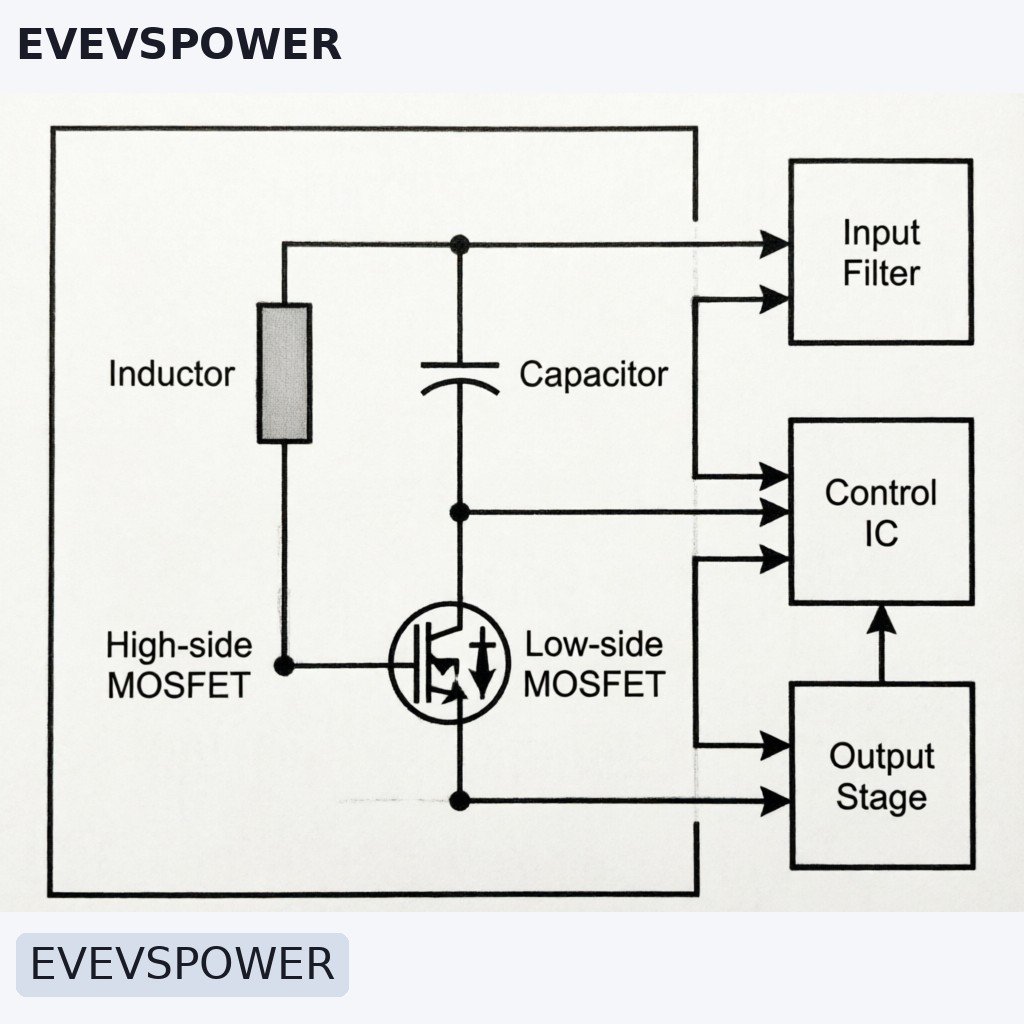
In semiconductor manufacturing, every nanometer counts. The demand for precision drives the need for power supplies that can handle complex, high-frequency operations. Our converters support the various stages of chip fabrication, from initial wafer preparation to final testing. By providing stable, isolated power, we help ensure that the sensitive electronic controls within fabrication tools operate without interference, maintaining the strict tolerances required for Angstrom-scale geometries.
What is etching?
Etching processes require precise control over ion energy to create the desired structures on the wafer surface. Asymmetric bias waveform generators play a key role here, allowing for precise command of etch geometries. The DC-DC converters powering these bias systems must respond instantly to changes in the etch recipe. Our modules are designed to handle these dynamic loads, helping to ensure that the ion energy remains consistent throughout the cycle. This consistency is vital for achieving uniform etch rates across large wafers, reducing defects and improving yield.
What is deposition?
Deposition processes, whether chemical vapor deposition (CVD) or physical vapor deposition (PVD), also benefit from stable power delivery. Uniform film thickness and composition depend on the stability of the plasma, which in turn depends on the stability of the power supply. EVEVSPOWER’s DC-DC converters provide the clean, regulated power needed to maintain optimal plasma conditions. Whether you are depositing dielectrics, metals, or semiconductors, our power conversion modules help ensure that the process remains repeatable and reliable.
At EVEVSPOWER, we combine specialized power electronics expertise with modern manufacturing agility. As an ISO9001 certified DC-DC converter factory, we offer more than just components; we offer partnership. From sample delivery in 5-10 working days to full-scale production with low MOQs, we support B2B buyers and engineers looking to innovate. Let’s discuss how our power conversion modules can enhance your next project. Visit www.everspower.com or contact allan@everspower.com for expert advice.