

Analytical instruments demand more than just electricity; they require absolute signal integrity. When designing power solutions for mass spectrometry, the power supply acts as the heartbeat of data accuracy. Even minor deviations in voltage stability or excessive ripple can obscure critical spectral peaks, rendering expensive analysis useless. As a specialized DC-DC converter manufacturer, EVEVSPOWER understands that MS engineers need platforms delivering low noise and programmable precision rather than generic industrial supplies.
Modern spectrometers operate under intense pressure to process samples faster while maintaining laboratory-grade resolution. This creates a unique engineering challenge: how do you balance high-speed switching with the extreme stability required for ion manipulation? The answer lies in purpose-built conversion architectures designed specifically for sensitive analytical loads. Whether sourcing standard modules or engaging a power conversion modules OEM for bespoke designs, understanding these electrical nuances is essential for system performance.
Accelerating Ion Source Throughput with Rapid Polarity Switching
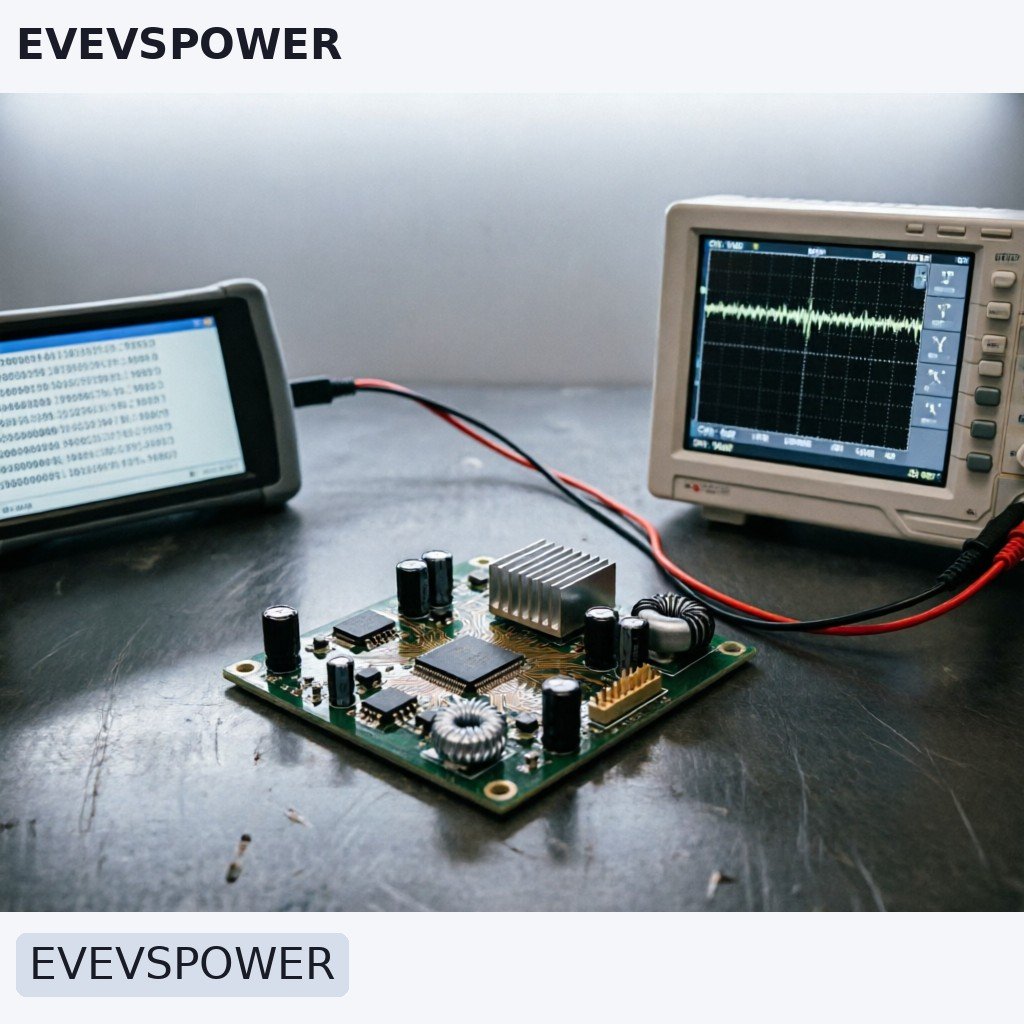
The ionization stage defines the speed limit of your entire analytical workflow. To maximize throughput, power systems must transition between positive and negative ion modes efficiently. In advanced MS source applications, this means achieving reversible high voltage outputs with fast settling times to support alternating polarity modes.
Why does this speed matter so much? Faster transitions allow researchers to alternate polarity modes within a single chromatographic run without sacrificing data points. However, achieving this requires more than just fast semiconductors. The control loop must manage energy storage elements carefully to prevent overshoot during reversal. A capable wide input DC-DC converter platform provides the necessary headroom and transient response to support diverse ionization techniques like Electrospray Ionization (ESI) and electrostatic lens focusing. Without this agility, the instrument spends valuable milliseconds stabilizing instead of measuring.
Consolidating Detector Bias Supplies into Compact Modules
Space inside an MS chassis is always at a premium, yet detector subsystems traditionally required multiple discrete high-voltage bricks. Modern design philosophy favors integration. By combining dynode biasing and electron multiplier supplies into a single footprint, engineers reduce wiring complexity and potential failure points.
Integrated detector solutions typically deliver distinct outputs tailored to specific detector components. Dynode or ion guidance voltages may require adjustable high-voltage outputs, while electron multipliers typically require stable, fixed-polarity negative bias. Crucially, these integrated units must maintain appropriate switching characteristics for source supplies where applicable. Built-in monitoring and protection circuits are non-negotiable here, ensuring safe operation even when arcing events occur in vacuum chambers. This consolidation directly supports higher sample throughput by minimizing parasitic capacitance and improving overall system reliability.
Selecting Reliable High-Voltage Conversion Platforms
Not every module on the market meets the stringent demands of analytical instrumentation. When evaluating components, look beyond basic wattage ratings. An ISO9001 DC-DC converter factory will typically validate parameters that generic suppliers ignore. While specific MS-grade high-voltage specifications vary significantly by application and manufacturer, foundational DC-DC building blocks must meet rigorous standards for isolation and efficiency.
| Parameter | Foundational DC-DC Converter Capabilities |
|---|---|
| Power Range | 1W – 5000W |
| Isolation Voltage | 1000V+ |
| Efficiency | Up to 98% (Boost Topologies; TI reference designs report 96–98.5% for this class, e.g. PMP23377) |
| Input Voltage | Wide Range Compatible (up to 160V) |
| Customization | Bespoke Form Factors & Filtering Available |
| Safety Compliance | ISO9001 Manufacturing Standards |
These benchmarks represent the tier of component quality required as a foundation for valid spectral data. Note that specific high-voltage output values and regulation metrics vary by custom configuration and downstream multiplication stages. At EVEVSPOWER, our catalog spans 1W to 5000W with inputs up to 160V and isolation exceeding 1000V, providing the verified foundational building blocks for precision systems, whether you need isolated DC-DC stages or custom boost topologies.
Tailoring Power Electronics Through Custom Engineering
Off-the-shelf components rarely fit perfectly into next-generation MS architectures. Mechanical constraints, specific noise floors, and proprietary communication protocols often necessitate customization. Partnering with a flexible DC-DC power converter supplier allows you to modify filter designs to meet exact ripple standards or adjust form factors for dense packaging.
Customization extends beyond hardware. Firmware development plays a pivotal role in modern power management. Digital control interfaces such as I²C, RS232/422/485, DeviceNet, or EtherCAT enable seamless integration with host controllers. Control logic can be tuned via software to optimize performance profiles for specific analytes. This level of adaptability ensures the power subsystem enhances, rather than limits, instrument capabilities.
Technical FAQs for MS Power System Designers
Why does voltage stability directly impact spectral resolution?
Mass spectrometry fundamentally relies on precise ion trajectory control. Voltage fluctuations translate directly into kinetic energy spread among ions, broadening peaks and reducing mass resolution. High ripple introduces baseline noise that masks low-abundance analytes, compromising detection limits. Stable power solutions for mass spectrometry must therefore maintain tight regulation to preserve data integrity. Without this stability, even the most advanced detector cannot recover lost information.
How does switching speed correlate with system throughput?
As instruments shrink and analysis cycles accelerate, the power supply becomes the bottleneck if it cannot settle quickly. Faster switching speeds reduce the dead time between polarity modes or voltage steps. This allows more scans per second or shorter dwell times per transition. In compact systems where thermal management is also challenging, efficient fast-switching topologies minimize heat generation while boosting productivity. The result is higher sample throughput without sacrificing the precision that long-term reliability demands.
Partnering for Analytical Excellence
Building superior mass spectrometry equipment requires power partners who understand the physics behind the specs. For OEM and ODM support tailored to analytical instrumentation, reach out to our engineering team at allan@everspower.com or visit www.everspower.com to discuss your power conversion requirements.