

When engineering high-power thermal processes or precision DC distribution, selecting the right control architecture is critical. Whether you are managing massive resistive loads in metal processing or designing compact power stages for OEM equipment, the choice between modular thyristor stacks and integrated solid-state converters defines your system’s efficiency and footprint.
This guide breaks down the landscape of industrial power control—from complex SCR (Silicon Controlled Rectifier) arrays to modern DC-DC conversion modules—highlighting how different architectures solve specific engineering challenges.
What Are the Thyristor Power Controller Families?
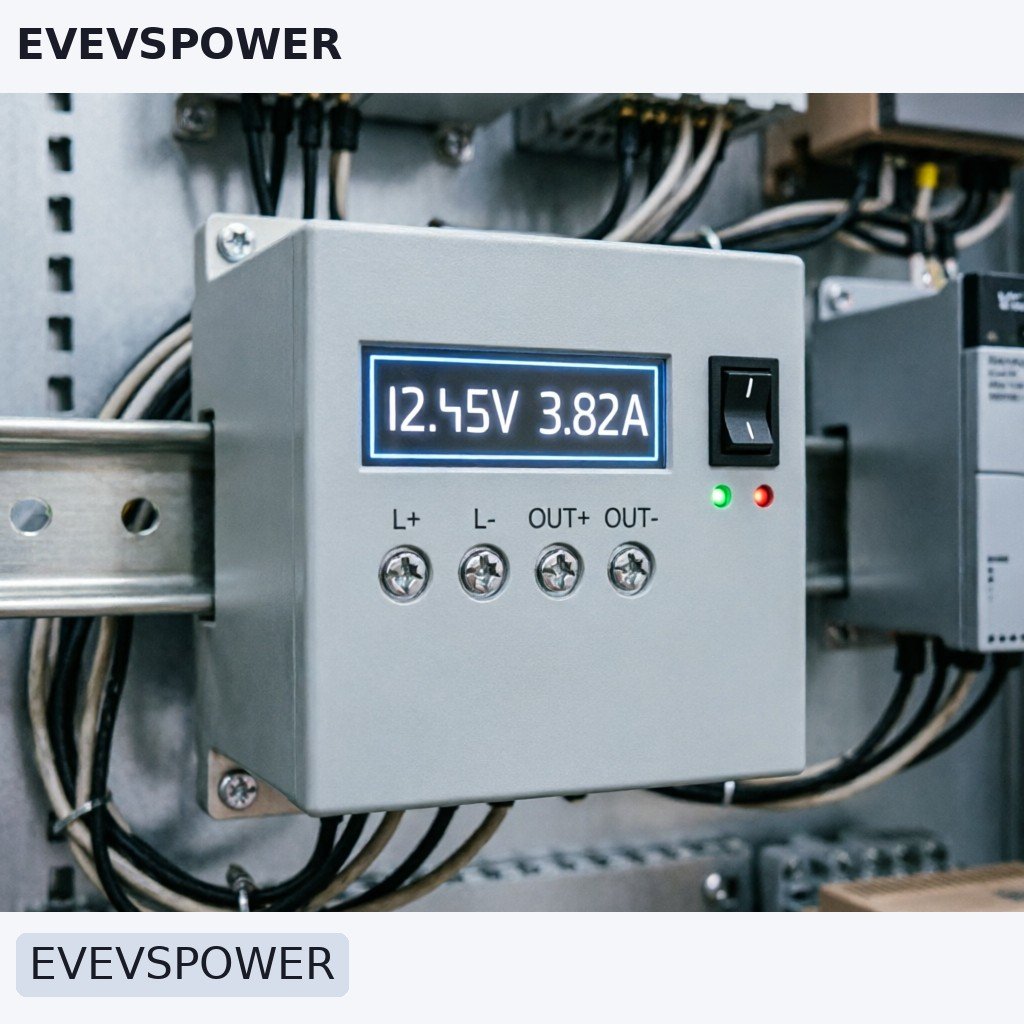
Industrial thyristor power controllers represent a broad spectrum of silicon-controlled rectifier technologies designed for heavy-duty applications. These systems range from simple phase-angle controllers to complex, digitally managed modular stacks. The core value proposition lies in their ability to handle extreme currents and voltages where standard semiconductor switches fail. Engineers typically select from available product families based on cooling requirements (air vs. water), communication protocol needs, and the specific topology of the load (AC or DC). Specific performance metrics, accuracy ratings, and protocol compatibility vary significantly by manufacturer and model series; always consult official datasheets for verified specifications.
What Are the Fundamentals of AC Power Regulation?
For applications requiring robust, direct AC power regulation, thyristor power controllers remain an industry standard. These devices modulate the RMS voltage delivered to the load by controlling the firing angle of the SCRs. This method allows for smooth, continuous power adjustment without the mechanical wear associated with contactors. In high-inertia thermal systems, such as large-scale ovens or extruders, these controllers can provide the stability needed to maintain temperature tolerances over long cycles, provided they are correctly sized and configured for the specific load characteristics.
What Are Modular SCR Solutions?
Modular SCR solutions address the complexity of high-current environments, including those requiring water cooling. Instead of relying on a single monolithic unit, this approach allows engineers to build custom configurations by integrating individual SCR components.
Key advantages of modular architectures include:
* Customization: Ability to tailor solutions to specific AC or DC application profiles.
* Scalability: Potential to expand current capacity by stacking modules, subject to manufacturer design limits.
* Thermal Management: Options for air or water cooling to support reliability under sustained high-load conditions.
This modularity is particularly useful for OEMs who need to fit power electronics into non-standard chassis sizes while maintaining performance. Note that safe implementation requires strict adherence to manufacturer guidelines regarding stacking, cooling, and electrical isolation.
What Are Compact and Integrated Controllers?
Space-constrained environments benefit significantly from compact thyristor controller designs. DIN-rail mountable units allow for dense packing in electrical panels and are commonly used for transformer-coupled loads and closed-loop thermal process control.
General Integration Considerations:
* Bus Connectivity: Many modern controllers support connection to bus modules for centralized management.
* Protocol Compatibility: Industrial fieldbus support (e.g., Profibus, CANopen, PROFINET, Modbus TCP/IP, EtherNet/IP, EtherCAT) is widely available but varies by model; verify compatibility with your specific PLC/PAC infrastructure before procurement.
* Mounting: DIN-rail options simplify installation in control cabinets for appropriately rated systems.
What Are the Advanced Digital Control Features?
Modern thyristor controllers increasingly leverage digital microprocessing to enhance precision and safety. While specific performance figures depend on the selected hardware, advanced digital control generally offers several advantages:
Digital Control Benefits:
* Mains-Load Optimization: Digital algorithms can help minimize harmonic distortion and improve power factor in compatible systems.
* Soft Starting: Built-in soft-start capabilities protect downstream transformers and loads from inrush currents during startup.
* Secure Separation: Some designs physically and logically separate control units from power units to optimize safety.
* Multi-Mode Operation: Flexible control methods and operating modes accommodate diverse process requirements.
* Networked Control: Scalable integration via fieldbus protocols supports complex automated processes.
Disclaimer: Claims regarding measurement speed, resolution, and accuracy percentages are specific to individual product models. Always validate these parameters against certified technical documentation for your intended application.
What Are DC Thyristor Applications?
While most thyristor controllers manage AC, specialized variants are engineered for direct current applications. These systems often utilize modular stack configurations suitable for DC architectures common in electroplating, electrolysis, and other industrial DC processes.
Configuration Considerations:
* Cooling: Both air-cooled and water-cooled options may be available depending on power density requirements.
* System Architecture: DC thyristor systems must be properly configured for the target rectifier topology. Consult manufacturer engineering resources to ensure safe and compliant integration.
How Is High-Precision SCR Control Achieved?
Certain industrial applications, such as semiconductor manufacturing, require SCR controllers with enhanced accuracy and dynamic response. Specialized high-precision units are designed to support minute power adjustments that impact product quality.
Performance Characteristics to Evaluate:
* Accuracy and Repeatability: Critical for processes sensitive to power fluctuations; verify stated accuracy against independent test data or certified specs.
* Dynamic Response: Fast detection of load resistance changes enables immediate compensation in demanding applications.
* Thermal Control Integration: Compatibility with external sensors (e.g., pyrometers) for closed-loop temperature control.
* Form Factor: Compact designs may be necessary for integration into space-limited manufacturing equipment.
Where Can Technical Resources and Documentation Be Found?
Accessing detailed technical documentation is crucial for proper implementation. Manufacturers typically provide comprehensive datasheets and user guides to support system design. When evaluating thyristor power controllers, seek out the following resources from the relevant supplier:
- Product Datasheets: Electrical, mechanical, and ordering information for specific controller series.
- User Guides: Installation, operation, and maintenance instructions, particularly for water-cooled or modular stacks.
- Interface Board Manuals: Documentation for optical/electrical interface boards, including troubleshooting.
- Configuration Manuals: Step-by-step setup and programming instructions.
- 3D Design Files: STEP or CAD files for mechanical integration and panel layout planning.
What Engineering Support and Safety Measures Are Available?
Technical documentation serves as the backbone of reliable deployment. Beyond basic datasheets, manufacturers often offer multilingual resources to support global engineering teams. These documents detail electrical specs, mechanical dimensions, mounting procedures, and environmental ratings. For complex modular solutions, these documents are vital for understanding how to wire multiple units together safely and efficiently.
Reliable power electronics require responsive support. Leading providers typically offer technical assistance to help engineers troubleshoot installation issues, configure communication protocols, or optimize control loops.
Safety Disclaimer: Thyristor power controllers operate at hazardous voltages and currents. Installation, commissioning, and maintenance must only be performed by qualified personnel in accordance with applicable electrical codes, safety standards, and manufacturer instructions. Improper use can result in severe injury, death, or equipment damage. Always de-energize and lock out/tag out systems before servicing.
Bridging High-Power Control with Efficient DC-DC Conversion
While thyristor controllers dominate high-power AC thermal applications, many modern OEM designs require efficient, compact DC-DC power conversion. At EVEVSPOWER, we complement traditional power control strategies with a wide range of DC-DC converter manufacturer solutions.
Our catalog spans 1W to 5000W, offering isolated DC-DC converters with 1000V+ isolation and boost converters reaching up to 98% efficiency. As a DC-DC converter factory and power conversion modules OEM, we provide flexible OEM/ODM services with MOQs and sample delivery timelines tailored to project requirements; please contact us directly to confirm current commercial terms and availability. Whether you need a wide input DC-DC converter for harsh industrial environments or a compact buck regulator for medical devices, our DC-DC power converter supplier network supports diverse engineering needs.
For detailed specifications on our Solutions portfolio, including our J, C, D, F, and Y series converters, please visit www.everspower.com or contact us at allan@everspower.com.